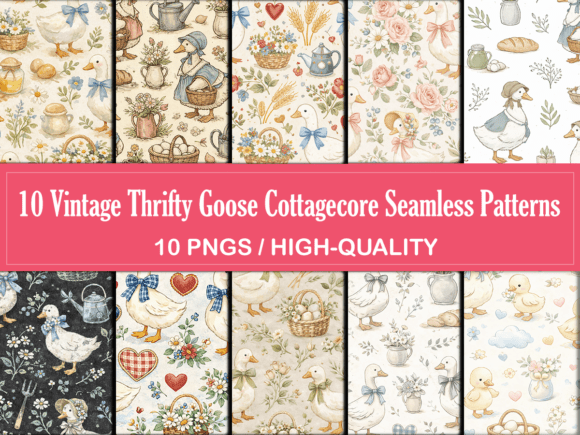
10 Vintage Goose Cottagecore Patterns
The appeal of the cottagecore aesthetic lies in its ability to transport us to a simpler, slower time. It is not merely about visual style; it is about evoking a feeling of safety, nostalgia, and connection to the earth. Within this movement, the humble goose has emerged as a surprisingly potent symbol. Unlike the delicate songbird or the majestic eagle, the goose represents utility, community, and the rustic reality of farm life. A collection of 10 Vintage Goose Cottagecore Patterns offers more than just decorative imagery; it provides a versatile toolkit for creators looking to infuse their projects with warmth, character, and a touch of whimsical history.
These seamless designs capture the essence of the "thrifty goose"—a character that feels pulled from an old storybook or a faded kitchen towel from the 1950s. The value of such a collection lies in its balance. The patterns are intricate enough to hold interest when viewed up close, yet balanced enough to create a soothing rhythm when repeated across large surfaces. For designers and hobbyists, this means having access to assets that do not require extensive modification to look professional and cohesive.
The Aesthetic of the Thrifty Goose
What makes these specific patterns stand out is their adherence to a genuine vintage palette rather than a modern interpretation of "old." True cottagecore relies on muted tones: sage greens, buttery yellows, dusty roses, and warm creams. The textures within these files often mimic the grain of linen, the weave of burlap, or the slight imperfection of hand-block printing. This attention to detail is crucial for authenticity.
When you incorporate these elements into your work, you are tapping into a collective memory of country kitchens and farmhouse décor. The goose, often depicted engaging in simple activities or surrounded by wildflowers and herbs, serves as a narrative anchor. It tells a story of self-sufficiency and gentle living. For a small business owner selling handmade goods, this narrative is powerful. It transforms a standard product into an experience, allowing the customer to buy into a lifestyle of comfort and simplicity.
Practical Applications for Textiles and Home Décor
The most immediate application for 10 Vintage Goose Cottagecore Patterns is in the realm of textiles. Because the files are fully seamless, they are ideal for fabric printing. Consider the potential for a limited-run collection of kitchen linens. Tea towels, aprons, and pot holders featuring these motifs fit perfectly into the current market demand for unique, non-mass-produced home goods.
- Kitchen Textiles: Use the lighter, airier patterns for tea towels and napkins. The repetitive nature of the design ensures that no matter how the cloth is folded, the visual remains pleasing.
- Upholstery and Curtains: Denser patterns with richer colors work well for accent pillows or café curtains. They add a layer of coziness to a reading nook or dining area without overwhelming the space.
- Table Runners: A long, continuous print can turn a simple wooden table into a focal point for gatherings, reinforcing the theme of communal eating and hospitality.
For those utilizing print-on-demand services, these patterns eliminate the need for complex technical setup. The seamless nature means you can scale the design to fit any product dimension without worrying about awkward cuts or visible edges. This efficiency allows entrepreneurs to focus on marketing and brand storytelling rather than file manipulation.
Paper Goods and Stationery Opportunities
Beyond fabric, the paper industry offers a vast landscape for these designs. The tactile quality of vintage-inspired art translates beautifully to physical paper products. Scrapbookers and journal enthusiasts are constantly seeking papers that offer more than just solid colors or generic geometric shapes. They want backgrounds that inspire writing and creativity.
Imagine a line of greeting cards where each envelope liner features a different goose pattern from the set. Or consider a seasonal planner where the monthly dividers utilize these motifs to mark the passage of time in a way that feels organic rather than corporate. Wedding invitations for rustic or barn-themed ceremonies could also benefit from these subtle, charming backgrounds. The key here is layering. By using the patterns as a base and overlaying elegant typography or hand-lettered quotes, designers can create sophisticated stationery that feels personal and curated.
Digital Integration and Content Creation
In an increasingly digital world, the demand for high-quality digital assets is just as strong as for physical ones. Bloggers, social media managers, and online educators can use these patterns to create a consistent visual identity. A YouTube channel focused on gardening, cooking, or slow living can use these textures for video thumbnails, lower thirds, and background graphics.
Furthermore, digital planners and GoodNotes templates are a booming market. Incorporating these seamless patterns as page backgrounds adds depth to digital journals, making the screen-based experience feel less sterile. When used in web design, particularly for e-commerce sites selling handmade or vintage goods, these patterns can serve as subtle section dividers or footer backgrounds, reinforcing the brand's commitment to the cottagecore ethos without distracting from the product images.
Strategies for Consistent Branding
Owning a set of 10 Vintage Goose Cottagecore Patterns provides a significant advantage in maintaining brand consistency. One of the biggest challenges for small creators is keeping their visual language coherent across different platforms and products. By sticking to a single, well-curated collection, you ensure that your tea towels, your Instagram posts, and your packaging all speak the same visual language.
To maximize this benefit, select a primary pattern to serve as your "hero" image—the one most associated with your brand logo. Use two or three secondary patterns for supporting materials like tissue paper or social media stories. Reserve the remaining designs for limited-edition drops or seasonal variations. This strategy prevents visual fatigue while keeping your audience engaged with fresh content that still feels familiar.
Adapting Styles for Different Audiences
While the core aesthetic is vintage, the application can be adapted for various demographics. For a younger audience, perhaps those new to the cottagecore trend, pair these patterns with bold, modern typography to create a juxtaposition that feels trendy and fresh. For an older demographic or traditionalists, lean into the nostalgia by pairing the geese with classic serif fonts and script that mimics handwriting.
Educators and parents can also find value here. These patterns are excellent for creating classroom decorations that foster a calm, welcoming environment. Flashcards, reward charts, or bulletin board borders featuring friendly animals and natural elements can make learning spaces feel less institutional and more like a home. The gentle colors are particularly effective in settings where reducing visual overstimulation is a goal.
Maintaining Quality and Originality
When working with popular aesthetics like cottagecore, there is a risk of designs blending together. To keep your results original, focus on how you combine these patterns with other elements. Do not rely solely on the image; think about the context. Pair the goose patterns with unexpected color accents or mix them with contrasting textures like raw wood or brushed metal in your photography.
Additionally, always respect the file specifications. Since these are provided in high-quality PNG format, ensure you are not compressing them further when uploading to platforms, which could introduce artifacts and ruin the vintage texture. Proper file management ensures that the "handmade" feel remains crisp and professional, whether printed on a massive banner or a small business card.
Ultimately, the 10 Vintage Goose Cottagecore Patterns collection is a bridge between imagination and execution. It removes the barrier of creating complex illustrations from scratch, allowing creators to focus on what they do best: telling stories, building communities, and making beautiful things. Whether you are designing a full clothing line or simply decorating a personal journal, these patterns offer a timeless foundation upon which to build your unique vision.