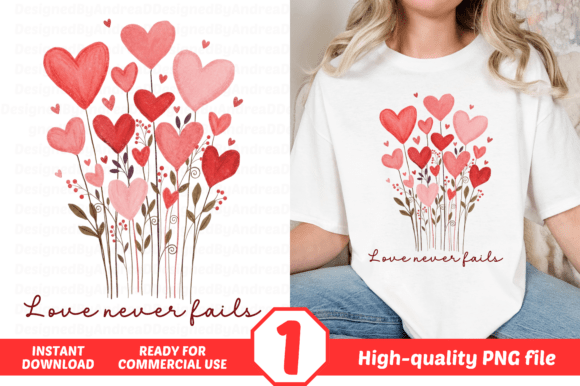
Why Your Love Never Fails Projects Fail: A Guide to Better Sublimation Results
The phrase "Love Never Fails" carries a weight that goes beyond simple decoration. Rooted in deep cultural and spiritual significance, it represents endurance, commitment, and unconditional care. For creators, entrepreneurs, and hobbyists, this message offers a powerful connection point for customers looking to express these values on t-shirts, mugs, wall art, and keepsakes. However, possessing a high-quality Love Never Fails PNG is only the first step. Many well-intentioned projects fall short not because the design lacks merit, but because of overlooked technical details and common misconceptions about how digital files translate into physical products.
When you download a file advertised as a 300 DPI Resolution graphic intended for sublimation or printing, there is an implicit promise of quality. Yet, too often, the final output appears pixelated, colors look washed out, or the design cracks after a single wash. These issues usually stem from avoidable errors in file handling, material selection, and application techniques. By understanding where things commonly go wrong, you can ensure your finished products honor the message they carry and protect your reputation as a creator.
Misunderstanding File Formats and Transparency
One of the most frequent pitfalls occurs before the heat press even warms up. Many beginners assume that any image file labeled "PNG" is ready for immediate use. While the Love Never Fails PNG included in premium bundles typically features a transparent background, users sometimes accidentally save or convert these files into formats like JPEG during editing. JPEGs do not support transparency; instead, they fill transparent areas with a white box. If you sublimate this onto a colored shirt or a dark mug, that unwanted white square becomes permanent.
To avoid this, always verify your file extension before importing it into your design software. When resizing, ensure you are maintaining the aspect ratio so the typography does not stretch unnaturally. A distorted "Love Never Fails" text looks unprofessional and undermines the elegance of the script. Furthermore, check the actual dimensions of the file. Even if a file claims 300 DPI, if the pixel dimensions are too small (e.g., 500x500 pixels), enlarging it for a large wall canvas will result in blurriness. For large-format prints, you may need to vectorize the design or source a higher-resolution variant specifically meant for expansive displays.
The Trap of Incorrect Material Selection
Sublimation is a chemical process that requires specific conditions to work correctly. A common mistake is attempting to sublimate directly onto cotton fabrics or non-coated surfaces. Sublimation ink turns into gas under heat and bonds only with polyester polymers. If you press your Love Never Fails design onto a 100% cotton t-shirt, the ink will sit on top of the fibers and wash away immediately, leaving a faint, ghostly image at best.
For cotton garments, the correct approach involves using a sublimation transfer paper paired with a specialty coating spray or a heat transfer vinyl (HTV) carrier sheet designed for cotton. Alternatively, choose blanks that are at least 65% polyester for vibrant, durable results. Similarly, when working with hard goods like mugs or frames, ensure they have a polymer coating specifically rated for sublimation. Using standard ceramic mugs without this coating will result in the design wiping off with a damp cloth. Always test a small batch with new blanks before committing to a large production run.
Overlooking Color Management and Profile Settings
What you see on your monitor is rarely exactly what comes out of the printer. Screens emit light (RGB color mode), while printers use ink (CMYK or sublimation ink sets). A frequent error is designing without accounting for this shift, leading to disappointed customers when the bright reds and deep blues on the screen appear dull or muddy on the product.
Before printing your Love Never Fails sublimation design, mirror the image horizontally. Sublimation transfers upside-down and backward; forgetting to mirror the text will result in an unreadable message. Additionally, calibrate your printer profiles. Use ICC profiles specific to your ink and paper combination. If your prints consistently look faded, check your heat press settings. Sublimation requires precise time, temperature, and pressure. Too little heat, and the ink doesn't fully gasify; too much heat, and you risk scorching the substrate or causing color shifts. Keep a log of your successful settings for different materials to ensure consistency across every order.
Neglecting Licensing and Commercial Usage Rights
In the rush to expand a business or create content for social media, many creators overlook the licensing terms attached to their downloads. The description notes that these designs are for individual use or to expand a business of printing stickers, t-shirts, and cards. However, "expanding your business" generally means selling the physical end product, not reselling the digital file itself. Reselling the raw PNG as a digital download violates most standard licenses and can lead to copyright strikes or legal issues.
Always read the specific license agreement included with your download. If you plan to use the design for a client's logo or a trademarked brand, verify that the license permits such usage. Most stock designs are for decorative purposes only. Respecting these boundaries protects your business integrity and ensures you can continue to access high-quality resources from designers who rely on fair compensation for their work.
Practical Steps for Flawless Execution
To guarantee your projects reflect the quality the "Love Never Fails" message deserves, adopt a checklist mentality. Start by inspecting the downloaded file at 100% zoom to check for artifacts or low-resolution edges. Prepare your substrate by lint-rolling fabrics and cleaning hard surfaces with alcohol to remove oils that could block ink adhesion.
- Verify Transparency: Place a colored shape behind your design layer in your software to confirm the background is truly transparent.
- Mirror Your Image: Make mirroring a mandatory step in your workflow for any sublimation project involving text.
- Test Press: Run a test print on a scrap piece of your chosen material to dial in time and temperature before pressing the final item.
- Cool Down: Allow sublimated items to cool completely before peeling off protective papers or handling them, as the ink sets during the cooling phase.
By paying attention to these details, you transform a simple digital download into a cherished physical object. Whether you are creating a gift for a wedding anniversary, a comforting piece of wall decor, or inventory for your small shop, the difference lies in the execution. The Love Never Fails theme resonates because it speaks to permanence; your production quality should reflect that same enduring standard. Avoid the shortcuts that lead to reprints and refunds, and instead invest time in mastering the technical side of your craft. This approach not only saves money and materials but also builds trust with your audience, ensuring that the love you put into your work never fails to shine through.